Introduction
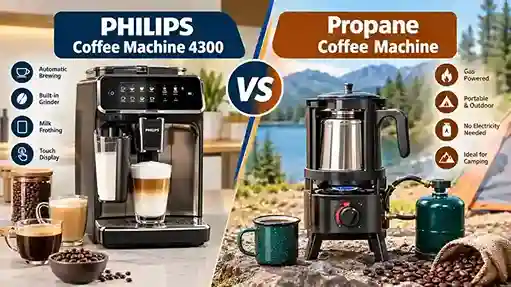
Philips Coffee Machine 4300 vs Propane Coffee Machine Selecting whether to purchase the Philips Coffee Machine 4300 or a Propane Coffee Machine depends on your lifestyle, what type of coffee you like, how much money you want to spend on the machine, and how you prepare coffee each day. While both machines can provide you with an excellent cup of coffee, they have been developed for different purposes. The Philips 4300 is a fully automatic espresso maker that will allow you to quickly and easily make coffee indoors. On the other hand, Propane Coffee Machines are primarily used as portable coffee makers, which would come in handy when electricity is not readily available.
In this comparison we are going to look at the different aspects of the two coffee makers. These are features, value, advantages, disadvantages and where each is best used. Knowing what makes them unique will allow you to make a more informed purchase. Also included in the comparison is coffee quality, maintenance, portability, running costs and FAQs.
1. Philips Coffee Machine 4300: Product Overview
The Philips Coffee Maker 4300 Series allows consumers to have fresh coffee available to them without having to use an espresso maker. This product will be able to provide the consumer with a variety of coffee drinks (espresso, regular coffee, cappuccino, and latte macchiato) based on which specific model is purchased. The automatic brewing system makes this item perfect for individuals that do not want to spend much time making their morning beverage, working from home, and families with members that like different beverages.
The machine uses all of the bean when making coffee and has an in-built grinder that prepares fresh coffee every time. Some models have the LatteGo milk system, variable coffee strength options, a simple user interface, and allows users to set their own preferences for beverages. With these features the Philips 4300 is ideal for coffee lovers looking for a coffee shop-like experience in their home environment. Unfortunately, due to the machines’ electric requirements and design of being used on a counter top, it will likely not work well in remote areas where electricity is unreliable.
Value
The Philips 4300 has the advantage of value in terms of ease of use, beverage options, and customization. Rather than having to buy three separate appliances for bean grinding, brewing espresso, and frothing milk, consumers have the option of performing multiple functions using a single appliance. While the cost to acquire the Philips 4300 may initially be higher than the cost to acquire a simple coffee maker, individuals who consume large amounts of coffee will find that they are able to save time and produce various types of drinks from their own kitchens.
Overall value will depend on how frequently you use your product, cost of replacing filters, cleaning products used for the product, and if there are local repair shops for the product. Before buying, consumers should research the specific model they are considering and its warranty.
Key Features
Automatic brewing: Prepare selected beverages using the machine’s controls.
Integrated grinder: Grind whole beans shortly before brewing.
Milk frothing: Selected versions include the LatteGo milk system.
Adjustable coffee strength: Customize the intensity of your drink.
Grinder adjustment: Many Philips 4300 models offer multiple grind settings.
User-friendly display: Select drinks and adjust available settings.
Removable brewing unit: Makes routine cleaning and maintenance easier.
Water filtration compatibility: Compatible models can use an AquaClean filter.
Eight coffee options are listed on Philips’ website for some of its 4300 Series models; however, there will be variations in which drinks and accessories are available depending upon the model. You should always consult with the manufacturer’s specifications when purchasing a specific model.
Pros
Convenient operation for everyday coffee preparation.
Multiple beverage options in one machine.
Freshly ground beans provide a more aromatic brewing experience.
Customizable strength and drink volume.
Milk-based drinks are available on suitable models.
Suitable for households with different coffee preferences.
Integrated brewing equipment reduces the need for separate appliances.
Cons
Requires electricity to operate.
Generally designed for indoor countertop use.
Costs more than many basic coffee makers.
Needs regular cleaning and periodic maintenance.
Grinder and brewing components may require professional servicing.
Not ideal for camping without a suitable power supply.
Recommended
The Philips Coffee Machine 4300 should be considered by individuals that want convenience in their daily routine, options in what they drink each day, and the ability to produce a quality cup of coffee on an ongoing basis. This machine is also especially beneficial for those that regularly consume espresso, cappuccino, or latte-based drinks and would like to have the convenience of automated controls rather than having to manually brew these types of drinks.
Prior to making a purchase decision, evaluate each machine based on its dimensions, drink offerings, type of milk system, warranty coverage, and availability of local service support. The long term satisfaction you experience with your purchase will be influenced more by these factors than simply the model name.
Best For
Home kitchens and apartments
Home offices and everyday coffee routines
Coffee lovers who enjoy milk-based beverages
Households with different drink preferences
People who want freshly ground coffee with minimal effort
2. Propane Coffee Machine: Product Overview
Propane coffee machines are a general category of coffee machines that use propane gas to produce heat. These can include propane-powered espresso makers, propane-powered brewing systems, and propane-powered coffee makers (portable). Propane-powered systems use gas combustion to create heat; unlike the Philips 4300, which uses electric power to control both grinding and brewing. The type of propane-powered coffee machine will determine the exact method of brewing.
This kind of propane-powered coffee machine can be very helpful to those who camp, travel, work outside, or simply desire to make coffee when they do not have access to a regular kitchen. When properly hooked up, a compatible propane system will function without the use of electricity from your home, if it has been built for this type of operation and you have the proper connection to your propane source. However, as is true of most other types of propane coffee makers, some do not include an automatic grinder, a one touch drink feature, nor do they include a built-in milk frother. Therefore, before purchasing a propane coffee maker you should check the manufacturer’s specifications to see what features are included with the machine you are considering.
Value
Propane coffee makers offer two key benefits: portability and being independent of household electricity. As an outdoor enthusiast, a propane coffee maker would allow you to make hot coffee while camping, traveling by car, or participating in other activities that do not have access to electricity.
The total cost of the coffee maker also includes additional equipment. Additional items include: – A compatible propane tank. – Propane. – A level area to place the coffee maker. – Other coffee making equipment such as grinders and/or brewers. This type of coffee maker will provide the greatest value to individuals who frequently prepare coffee outside. However, if you make multiple cups of coffee at home each day, then a propane system will likely be less convenient than an automatic machine.
Key Features
Gas-powered heating: Uses propane as a heat source in compatible designs.
Outdoor convenience: Can be useful in locations without household electricity.
Portable options: Many camping-oriented products are designed for travel.
The available systems can accommodate various brewing techniques.
Fuel-based operation: Requires an appropriate propane supply.
Simple equipment options: Some models contain fewer electronic parts than automatic machines.
Can be used in many different types of environments including camping, traveling, and working outside when used according to directions.
These features are dependent upon the product itself. A basic propane burner that works with a separate coffee brewing device does not equate to a propane espresso maker designed for the purpose.
Pros
Useful in outdoor locations without electricity.
Suitable for camping and certain travel situations.
Can provide hot coffee away from a conventional kitchen.
Some designs are compact and easy to transport.
May be practical for occasional off-grid coffee preparation.
Can work with different brewing equipment, depending on the setup.
ConsPhilips Coffee Machine 4300 vs Propane Coffee Machine
Requires propane fuel and compatible equipment.
Fuel adds an ongoing operating cost.
May require more manual preparation than an automatic machine.
Often lacks an integrated grinder or automatic milk system.
Brewing time and temperature control vary by design.
Outdoor use requires careful attention to fire and carbon monoxide risks.
Not every model is suitable for espresso or milk-based drinks.
Recommended
The propane coffee maker is best suited for individuals that frequently go camping, travel to out of the way places, or have to make coffee in locations where there are no electric sockets available. This can be a practical option for those that value portability and operating off-grid over automated selections.
Select a product tailored to your specific application area. Prior to purchase, verify the product will work with your fuel type, can be transported easily, uses the brewing method you desire, can be cleaned effectively, and complies with all of the manufacturer’s safety guidelines.
Best For
Camping and outdoor recreation
Road trips and remote work locations
Users who need coffee without household electricity
Outdoor enthusiasts who value portable equipment
People comfortable with manual brewing and fuel management

3. Philips Coffee Machine 4300 vs Propane Coffee Machine: Main Differences
The main distinction between these two options is what they are designed to do. The Philips 4300 is designed for automated coffee making at home, whereas propane powered appliances are designed for providing heat when there is no electricity.
Brewing Convenience
The Philips 4300 has the edge for daily usability. Depending on the model, you can choose a drink and adjust certain features of your machine using its control panel. The grinder and brewer operate as one unit to help save time in preparing coffee.
With a propane system, you typically have to do more work. Depending on how it’s designed, you will likely have to heat up some water, measure out the correct amount of coffee, keep track of the entire brewing process, and clean each piece of equipment individually. There are specialized propane-powered coffee makers that make those processes easier; however, never assume that automated processes will be included unless you read the product specifications.
Winner for convenience: Philips 4300.
Coffee Quality and Flavor
The type of coffee bean, how dark the beans are roasted, the size of the ground coffee, the quality of the water used for brewing, the temperature of the water used to brew, and the amount of time that the water is left to extract flavors from the ground coffee all affect the overall flavor of your cup of coffee. With an built-in grinder and user-controllable settings for each variable mentioned above, the Philips 4300 allows users to establish a consistent, reproducible daily coffee recipe.
When used with the right kind of brewing gear, a propane-powered coffee maker will create an outstanding cup of joe. The quality of each cup depends on how well you control the temperature of the water and your brewing method. Just because it’s a propane-heated machine doesn’t mean it’s going to automatically make your coffee taste stronger or better.
The winner for repeatability of automated preparation is the Philips 4300. For manual brewing, the result will depend upon the equipment and method used.
Portability and Power
The Philips 4300 is an oversized tabletop appliance which requires electricity. It would be suitable for use in a residential kitchen however, moving it from one place to another is typically not possible.
For many types of outdoor activity, a portable propane-fueled coffee maker may be a much more convenient alternative than using one that requires electricity. If you design your entire portable coffee system around propane, you won’t need access to a household electrical outlet. However, you will still need to ensure that the coffee maker remains stable, that the propane-fueled fuel system works with the coffee maker, and that you are allowed to use this type of equipment in the specific location where you plan to operate it.
Winner for off-grid portability: a suitable propane coffee machine.
Maintenance and Cleaning
The Philips 4300 requires frequent cleaning of the drip tray, regular removal of used coffee grounds, maintenance of the brewing unit, and maintenance of the milk system (where available). Water filter and descaling frequency are dependent upon the specific model and the condition of the water.
Propane equipment has less electrical components, however, the equipment requires maintenance. Maintenance includes the removal of coffee residue and water deposits, as well as cleaning of propane burners and fuel line connections. While the construction is simpler than other types of equipment, simple does not imply no maintenance.
Winner: depends on the exact design and how much maintenance you prefer.
Cost and Long-Term Value
The Philips 4300 has a higher cost at the beginning compared to most small portable coffee makers. However, it also offers automation features and some models will have an built-in grinder and milk frother.
A propane system may be less expensive than other systems at first glance. However, there are many factors which can greatly affect the overall cost. For example, fuel, accessories, a grinder and other brewing supplies can make the total significantly higher. If you plan to brew frequently at home, the Philips can give you the convenience factor. On the other hand, if you are planning to camp regularly then a propane system will likely be the most practical choice.
Before you buy, compare the total price of purchasing the product, the cost of supplies needed to operate it, what is covered under its warranty, and how long you plan to use it.

4. Which Coffee Machine Should You Buy?
Your selection of the right device for your needs will depend upon the location at which you create coffee, as well as the method of preparation that you prefer.
If you would like to have fresh coffee made from beans, an automatic way of brewing your coffee, easy options to choose what type of coffee beverage you want to drink and the ability to make milk-based coffee drinks with certain versions of this machine, then the Philips Coffee Machine 4300 is right for you. It will be a good choice for people who have a kitchen in their house that has electricity.
If your primary objective is to make coffee during your camping, travel, or other times when there isn’t access to an electric outlet at home, then choose a propane coffee maker. Determine if the model makes the type of coffee you prefer and if the size and amount of propane it takes will fit into your travel plans.
As long as you are able to have access to coffee in both your home environment and when out in nature, having two separate types of brewing equipment will typically provide better options than having only one machine to handle both needs. Your automatic espresso machine will allow you to maintain your regular routine, whereas your small and lightweight portable coffee maker will provide you with the option of enjoying a hot cup of java during infrequent outdoor activities.
5. Coffee Machine Buying Tips
Before purchasing either option, consider these important factors:
Brewing Style: Choose if you want to make espresso, cappuccino, standard brewed coffee, or simply enjoy a single cup of coffee outdoors.
Adequate Power Source: Ensure that your selected device will function within the area where it will be utilized.
Portability: Compare weight, dimensions, storage needs, and setup time.
Cleaning: Look for removable components and clear maintenance instructions.
operating expenses: include the costs associated with the coffee beans, the coffee filters, all cleaning products, and if you use propane include that as well.
Safety: Verify that the manufacturer has authorized the condition in which the gas powered equipment will be operated and also verify what type of fuel is required by the manufacturer.
Warranty & Support – Learn about what your warranty covers, find out if there are any replacement parts available, and check to see if there is a local repair shop in your area.
Product details: Verify the model number and included items. Each product has different features even though they belong to the same product group.
Table of Contents
Frequently Asked Questions (FAQs)
Is the Philips Coffee Machine 4300 better than a propane coffee machine?
The Philips 4300 has the advantage of being easier to use for daily brewing at home. The Philips 4300 can prepare coffee automatically, and depending on model features, can also include integrated coffee grinding and milk frothing. Propane coffee machines are more suitable for use in areas outside your home that do not have access to electricity.
Can a propane coffee machine work without electricity?
Depending on what type of propane-powered coffee system you buy, you may be able to use your coffee system without needing household electricity. Propane generates the heat used to make coffee. Before buying a propane-powered coffee system for “off-grid” operation (i.e., operating the coffee system without household electrical power), find out if there are any electrical needs associated with using the propane-powered coffee system.
Does the Philips 4300 make cappuccino and latte macchiato?
Selected Philips 4300 Series models provide coffee-based drinks like cappuccino and latte macchiato. Some models that feature LatteGo will automatically create milk froth. Please refer to each model’s product specification for a complete list of possible beverage types and features as they differ from model to model.
Which coffee machine is better for camping?
The most convenient type of portable propane-fueled coffee maker is generally more beneficial for use while camping since it operates independently of an electrical source in the home. What will make the “best” choice for you will depend upon its weight, what type of fuel is required to run the device, how you intend to brew your coffee, and under what conditions the device is designed to be used safely.
Is a propane coffee machine cheaper to operate?
No. There are other expenses associated with using the Coleman, such as the cost of propane fuel and any other items you need to make your coffee. The Philips 4300 has the expense of electricity, coffee beans, and maybe even replacement filters and cleaner. It is up to you to figure out how much each option will cost based on how often you plan to use it and the price of those materials in your area.
Conclusion
Philips Coffee Machine 4300 and propane coffee machine are designed to meet two different types of user requirements. For most users, the Philips Coffee Machine 4300 is going to be the more suitable choice because it allows the user to have a more convenient and automated way to prepare coffee at home. It is particularly well suited for users who like espresso-based beverages or milk-based beverages as it has an integrated grinder, adjustable settings, and supports milk frothing capabilities making preparing coffee each day much simpler.
For the person who likes to drink coffee outdoors and doesn’t have access to electricity in their home, a propane coffee maker is better than an electric one. Propane coffee makers give you options for when you are camping or out in the middle of nowhere, but they also take more work to use because of the fuel management and manual preparation.
The most effective coffee machine will ultimately depend on how well it integrates into your everyday life. Consider automated machines with a wide selection of drinks for use at home, or portable, battery-powered machines that can operate without electricity when you are on an adventure in the wilderness. Verify exactly what type of machine you intend to purchase, compare its features and total cost, and adhere to each of the manufacturer’s safety guidelines prior to buying.